Physical Address
304 North Cardinal St.
Dorchester Center, MA 02124
Physical Address
304 North Cardinal St.
Dorchester Center, MA 02124

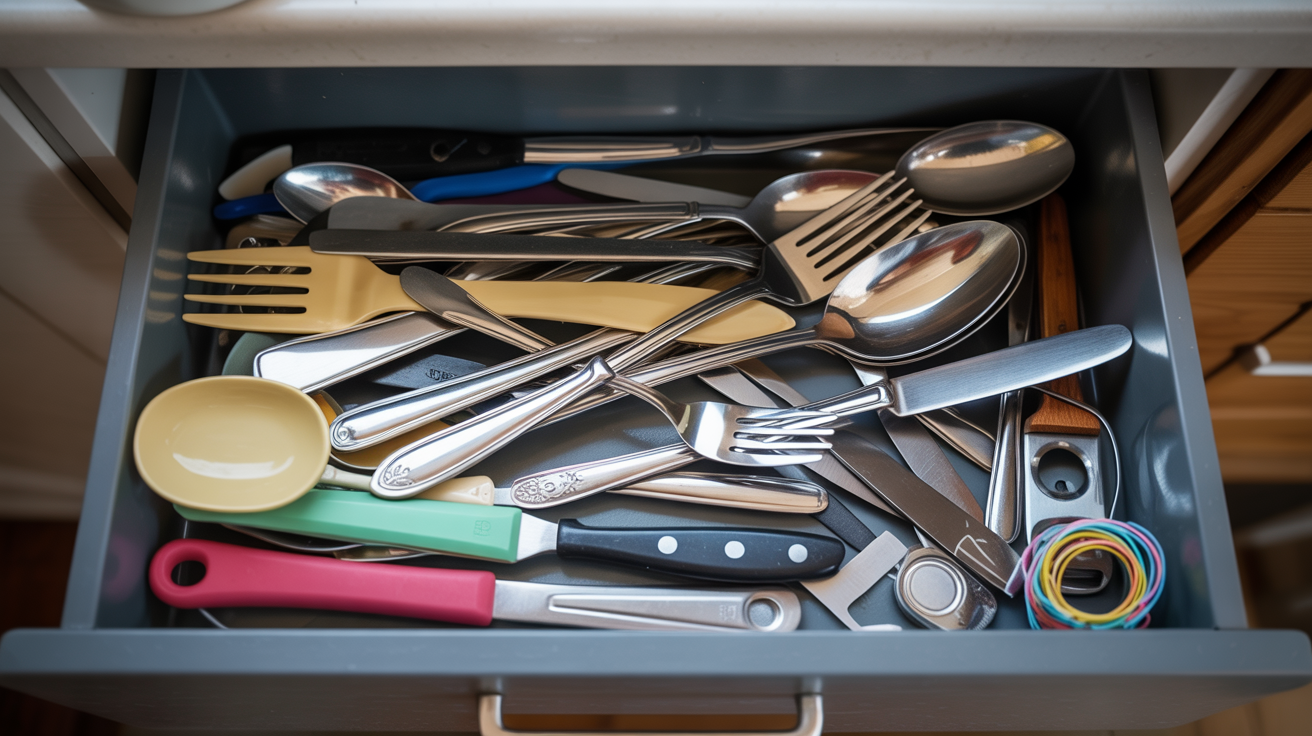
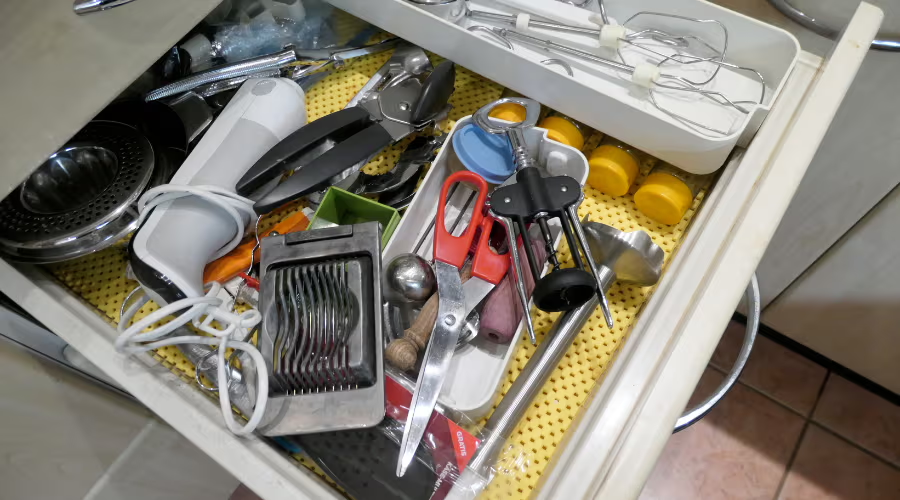
You open it looking for one thing. Instead, you dig. Utensils tangle together, batteries roll underneath ladles, rubber bands stick to measuring spoons, and the drawer refuses to close smoothly.
Every kitchen has this drawer. It’s not messy because you’re disorganized—it’s messy because it was never designed to work.
This single drawer quietly causes more daily frustration than any cabinet in the kitchen.
The problem drawer is usually wide, shallow, and easy to access. That convenience makes it the default dumping zone for anything that doesn’t have a clear home.
The real reasons it fails are simple:
This is why many people end up using drawer dividers designed to keep utensils separated, instead of relying on open drawer space.
Without structure, the drawer resets to chaos no matter how often you tidy it.
Many people empty the drawer, throw away extras, and neatly place items back. For a day or two, it works.
Then reality kicks in.
Utensils slide. Small items migrate. Frequently used tools get tossed back in quickly. Because everything shares one open surface, movement breaks order almost immediately.
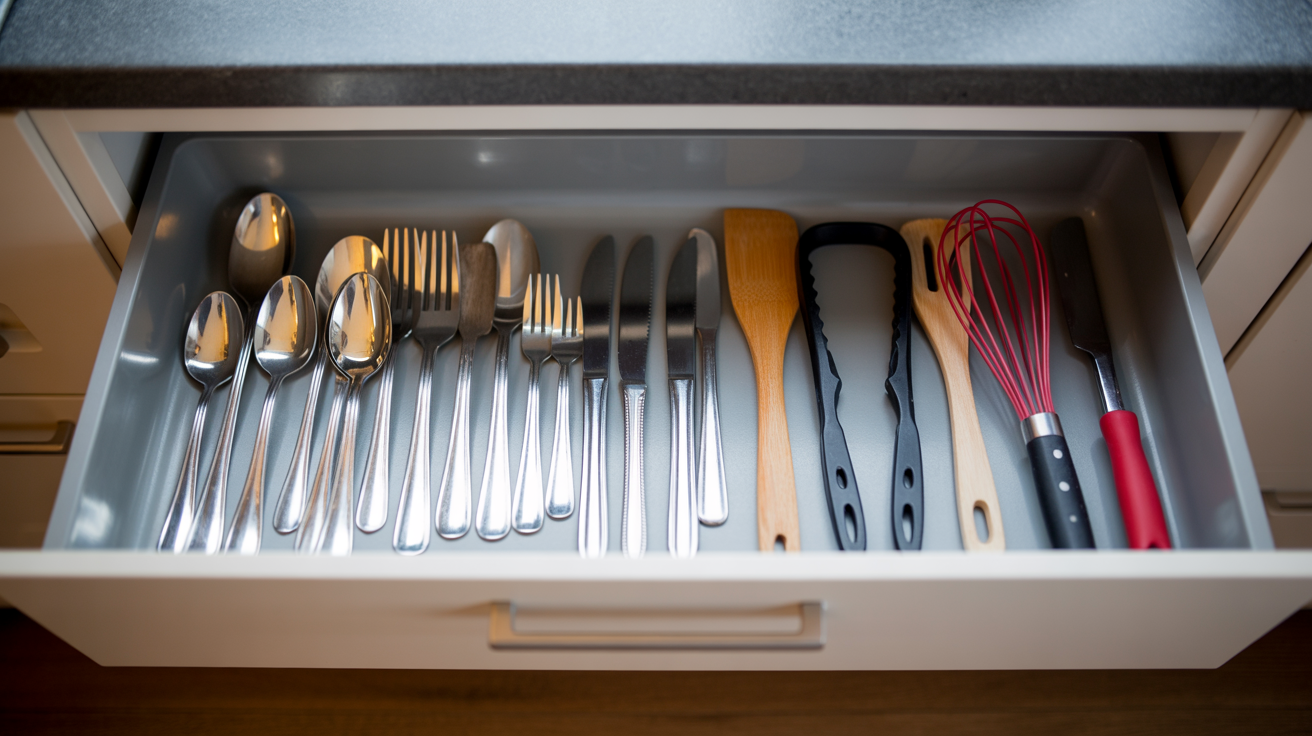
This drawer doesn’t need fewer items—it needs defined lanes.
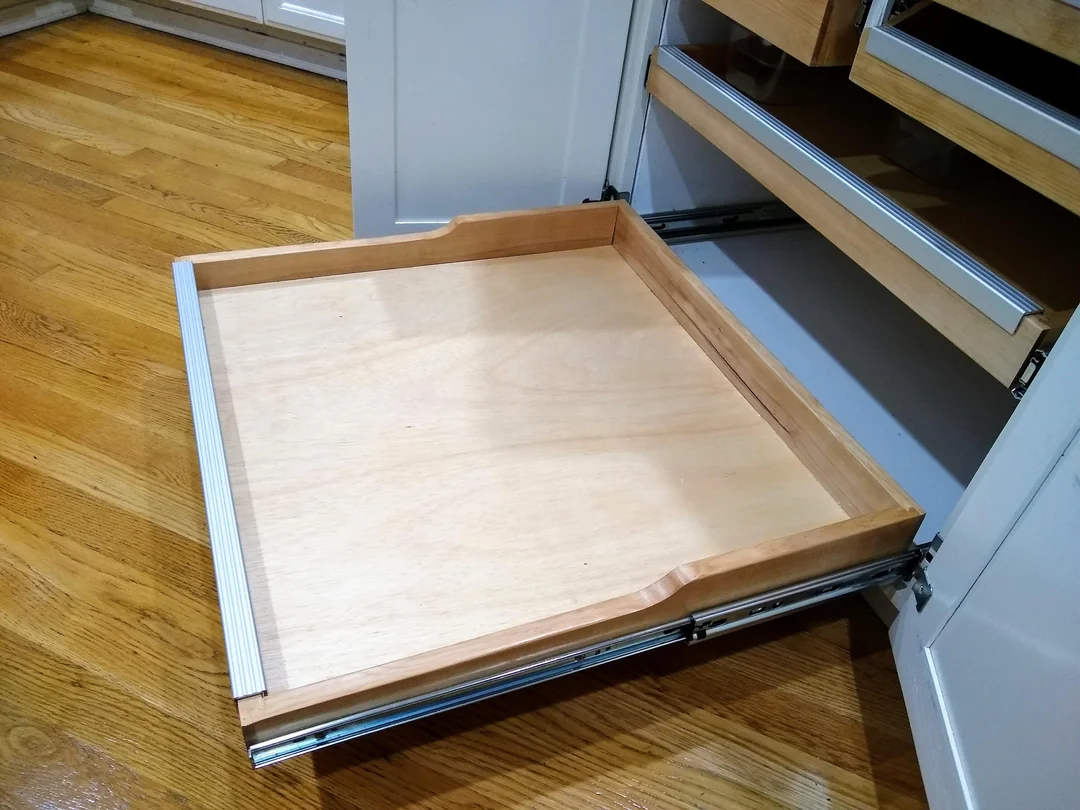
Unlike cabinets or shelves, drawers are used from above. If items aren’t separated horizontally, they overlap and tangle.
Good drawer organization relies on:
Without these, the drawer becomes friction-heavy and mentally exhausting.
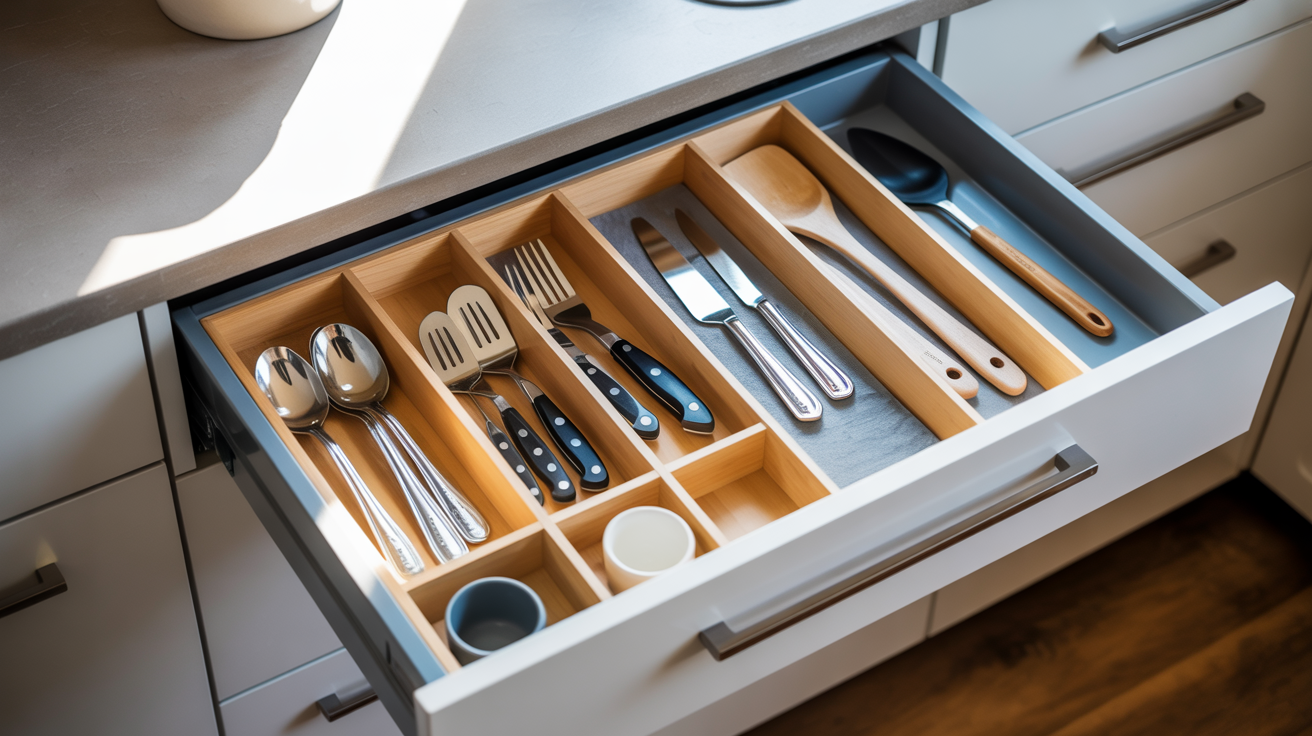
The solution isn’t a full kitchen overhaul—it’s correcting how this one drawer is structured.
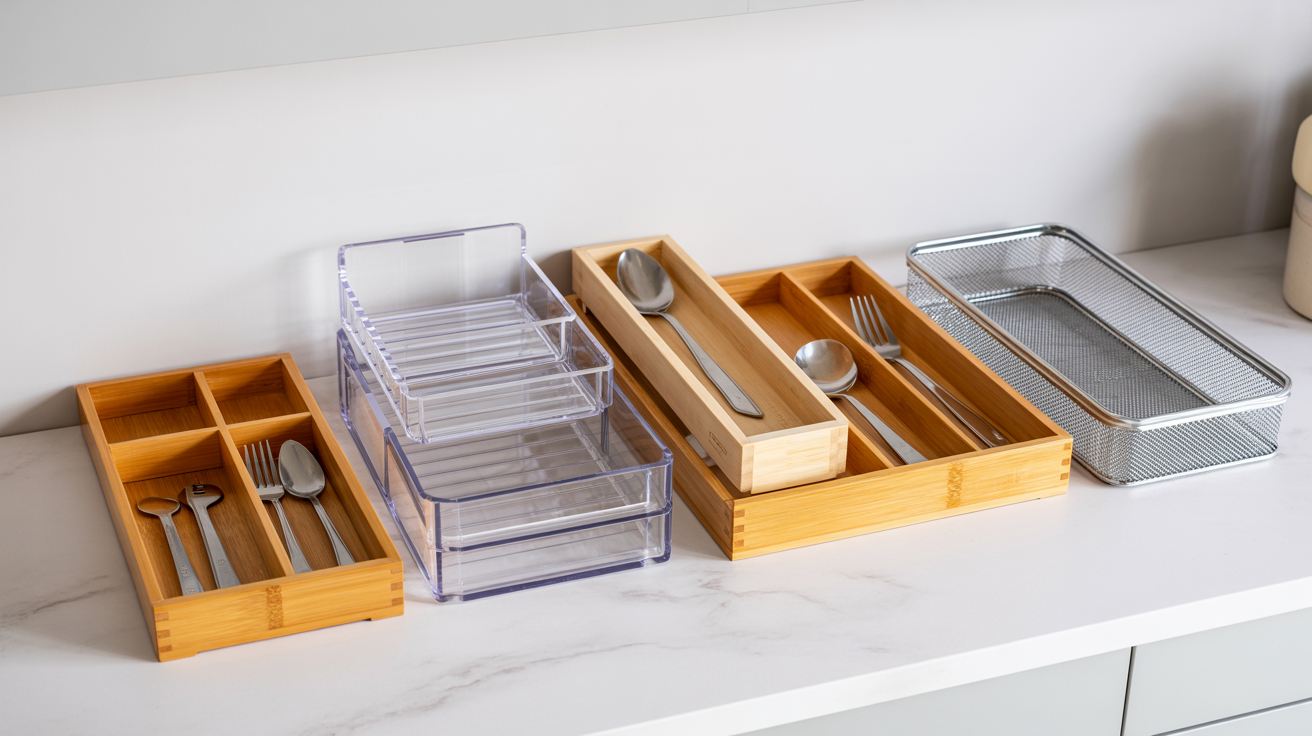
Adding expandable drawer dividers that adjust to the drawer width instantly creates structure without measuring or drilling.
Expandable drawer dividers
These create adjustable sections that adapt to the drawer’s width. Utensils stop drifting, and categories stay intact even with daily use.
In-drawer utensil trays
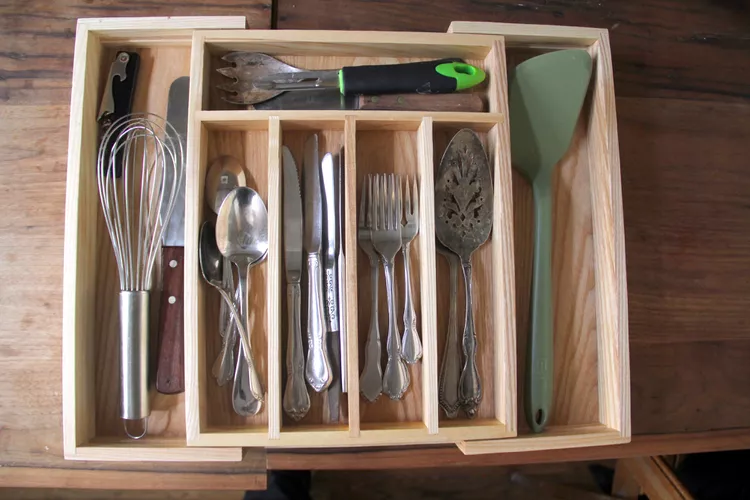
Instead of one large tray, designs with varied compartment sizes work better. Long slots for tools, small bins for odds and ends—everything stays visible and reachable.
Many kitchens start with in-drawer utensil trays with varied compartment sizes to keep everyday tools visible and easy to grab.
Modular drawer organizers
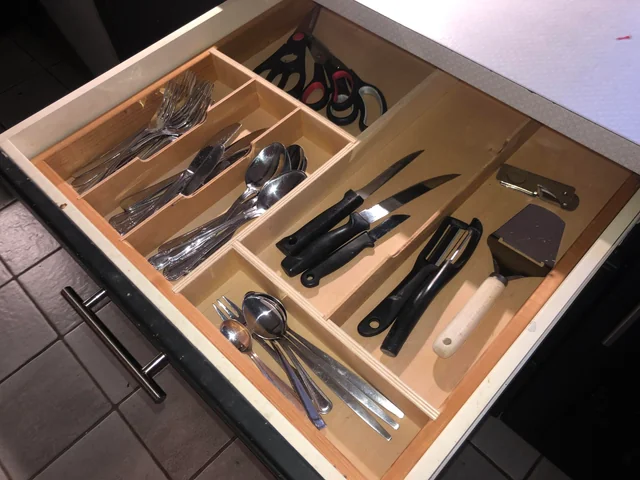
For mixed-use drawers, modular pieces let you customize layout based on what you actually use, not what looks tidy once.
For drawers that hold a mix of tools and small items, modular drawer organizer bins make it easier to customize the layout.
These tools don’t force perfection—they absorb movement.
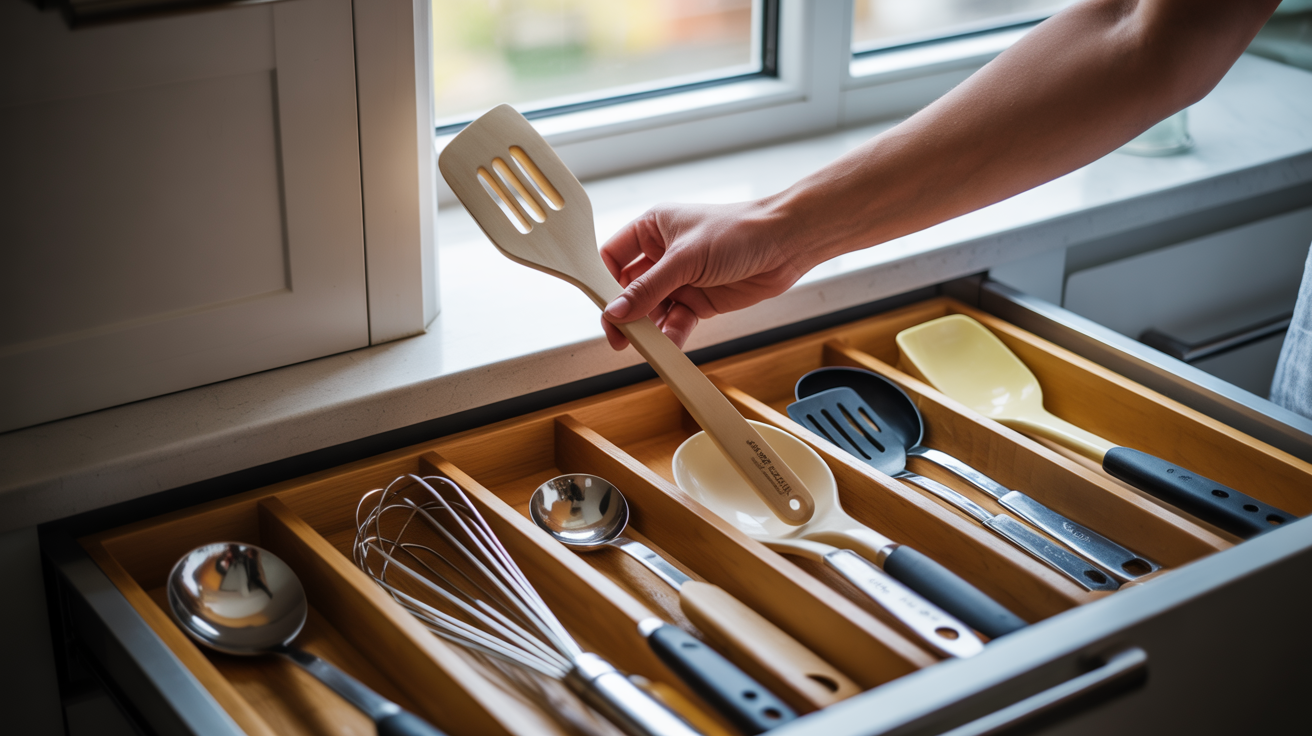
You’re cooking. One hand is holding a pan. You open the drawer with the other, grab a spatula, and close it quickly.
If the drawer is open space, items shift. If it’s divided, nothing moves.
Organizers that fit snugly—like non-slip drawer organizers for kitchen tools—help everything stay in place even with quick use.
That difference—friction vs flow—is why some kitchens feel effortless and others feel annoying even when they’re clean.
When the main utility drawer doesn’t work:
Fixing this drawer often triggers a chain reaction. Suddenly, tools go back where they belong. Counters clear up. You stop re-organizing every week.
This is why people browsing drawer organizers on Amazon aren’t looking to “upgrade”—they’re trying to remove a daily irritation.
Once the problem is clear, selection becomes practical, not emotional. Most shoppers look for:
At that point, clicking through a few drawer organizer options feels logical, because the drawer finally has a defined job.
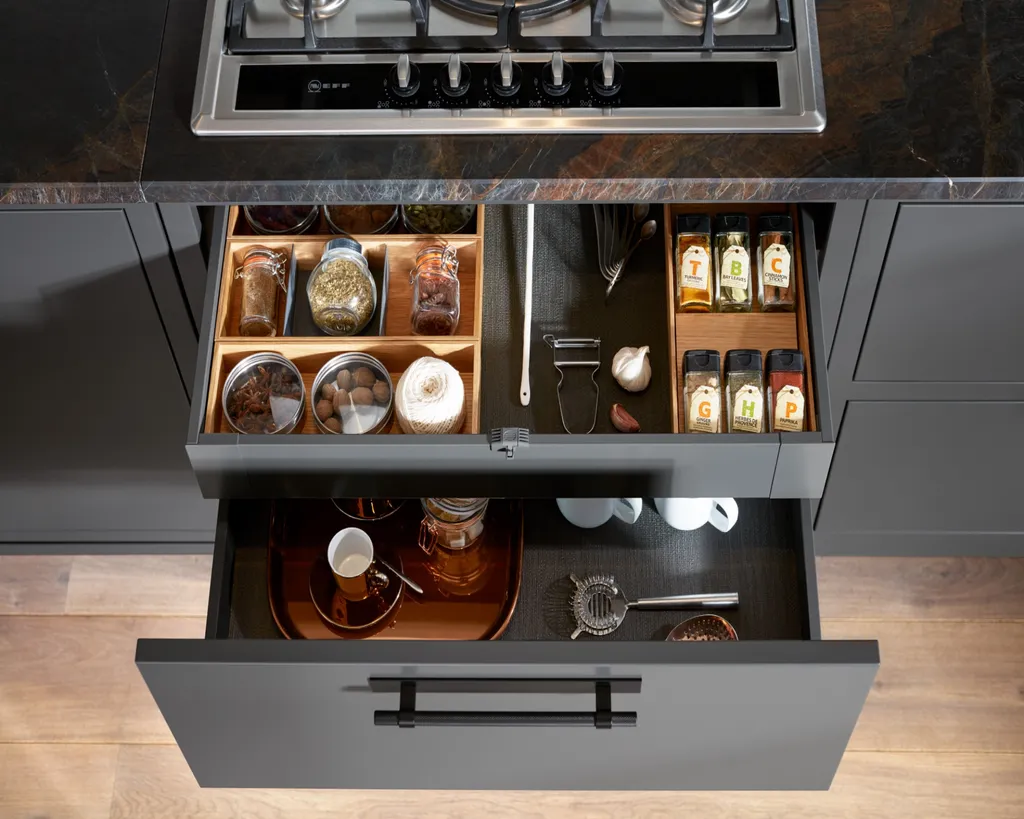
The drawer that ruins kitchen organization isn’t cursed—it’s just unmanaged space. When flat surfaces are divided, order becomes automatic.
You don’t need more storage. You don’t need stricter habits. You just need a drawer that works the way you use it.
Starting with a drawer organizer designed for shallow kitchen drawers is often enough to stop the chaos from returning.
Fix that one drawer, and the rest of the kitchen starts behaving better without extra effort.