Physical Address
304 North Cardinal St.
Dorchester Center, MA 02124
Physical Address
304 North Cardinal St.
Dorchester Center, MA 02124

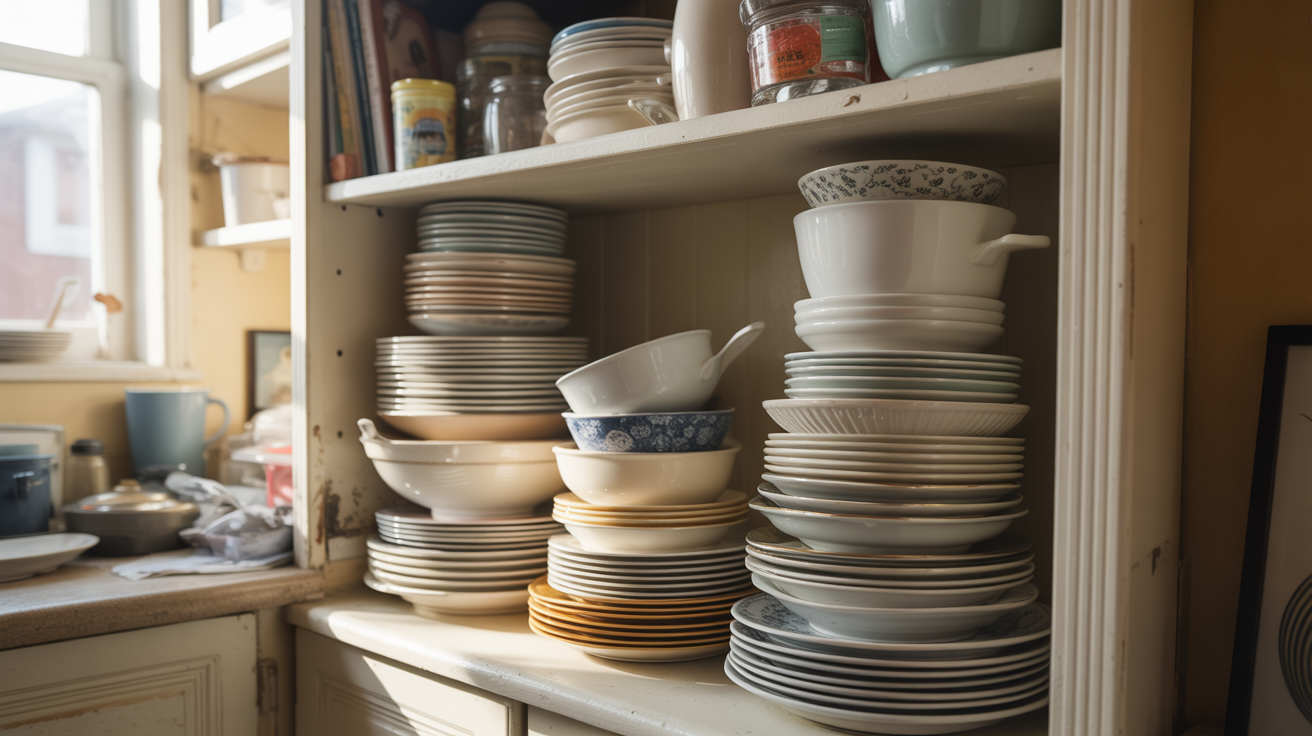
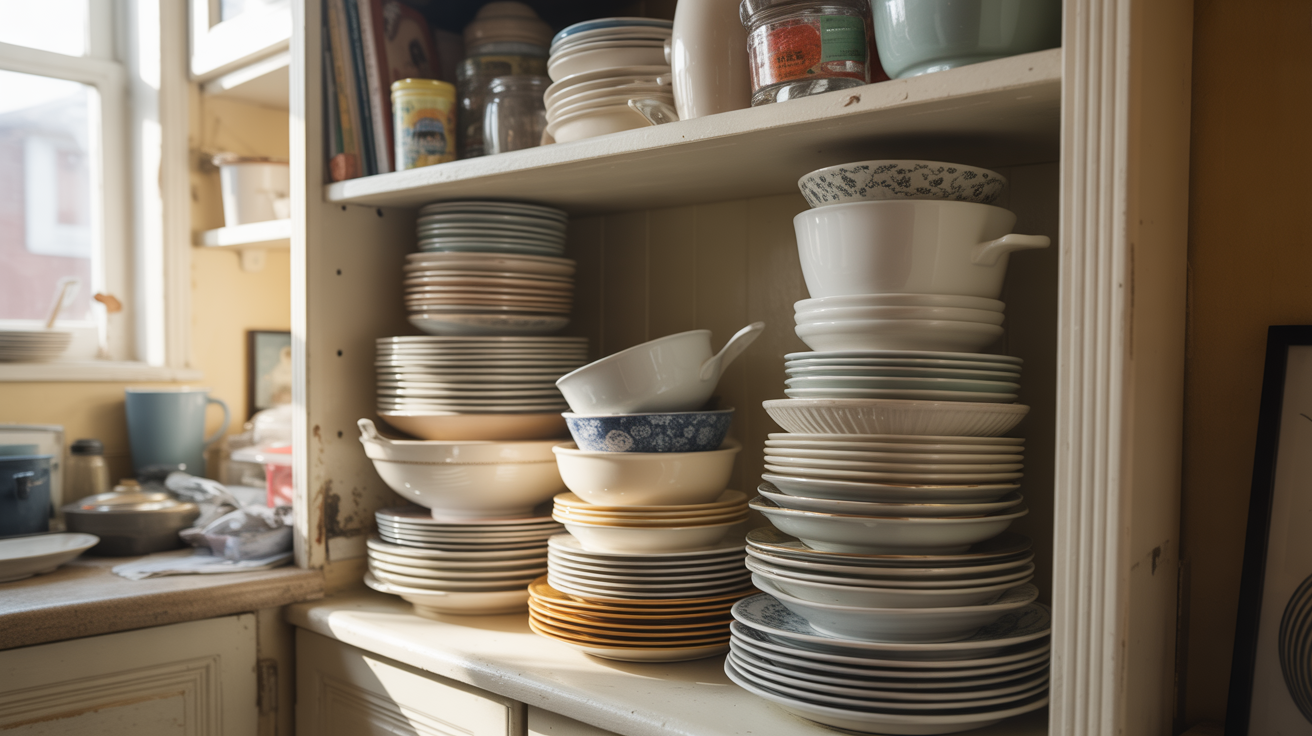
For a long time, my kitchen cabinets felt full even though they weren’t. Stacks of plates hid bowls behind them. Pots were nested so tightly that pulling one out meant removing three others. Items at the back might as well not have existed.
Every reorganization session ended the same way: things looked neat for a day, then went right back to feeling cramped. The cabinet wasn’t small. It was just badly used.
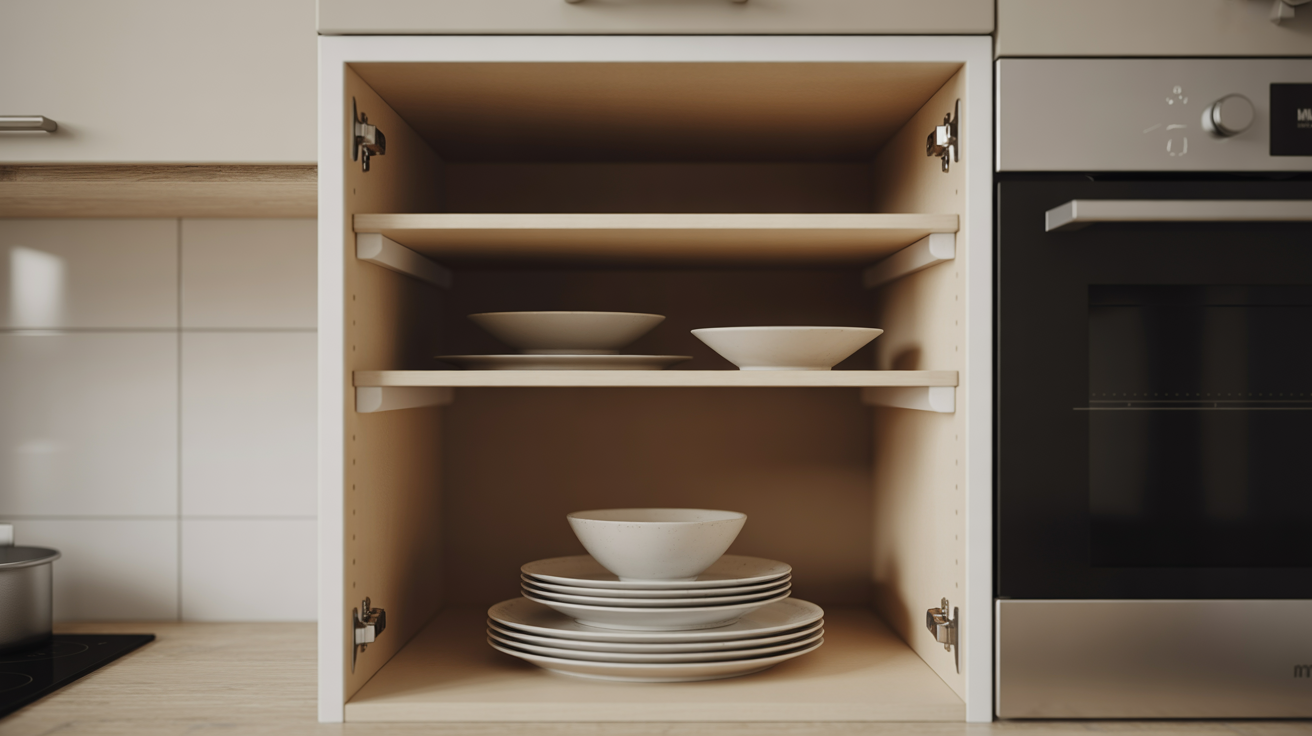
Most kitchen cabinets fail for one simple reason: they’re deep, but we use them flat.
Here’s what actually happens:
This is why many people turn to cabinet organizers that create a second storage level, instead of stacking everything on one shelf.
When you can’t see or reach items easily, you stop using the space efficiently—even if there’s plenty of it.
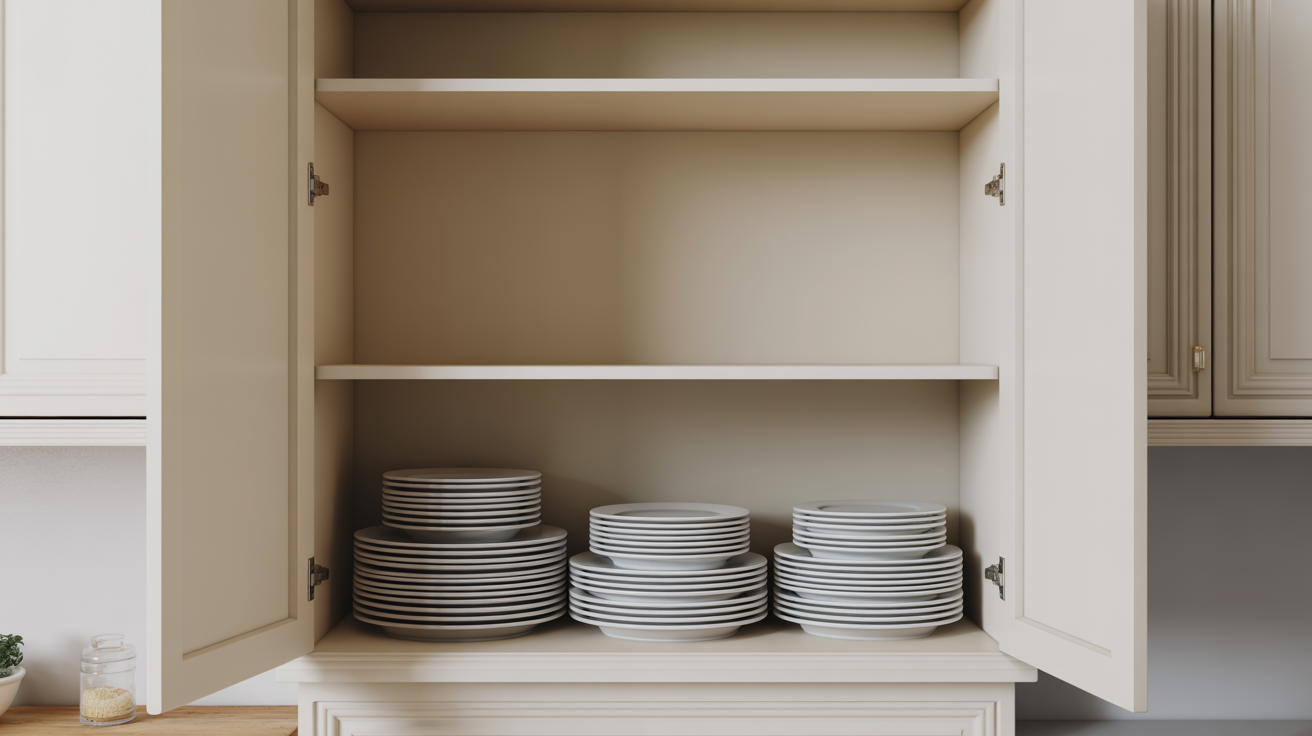
Cabinets have height, but most shelves only create one usable surface. Everything above that surface becomes unused air.
Real-life example:
You stack plates on a shelf. There’s still space above them, but nothing can live there because the stack already fills the footprint. The result? One tall pile and zero flexibility.
This is where storage feels limited even when it isn’t.
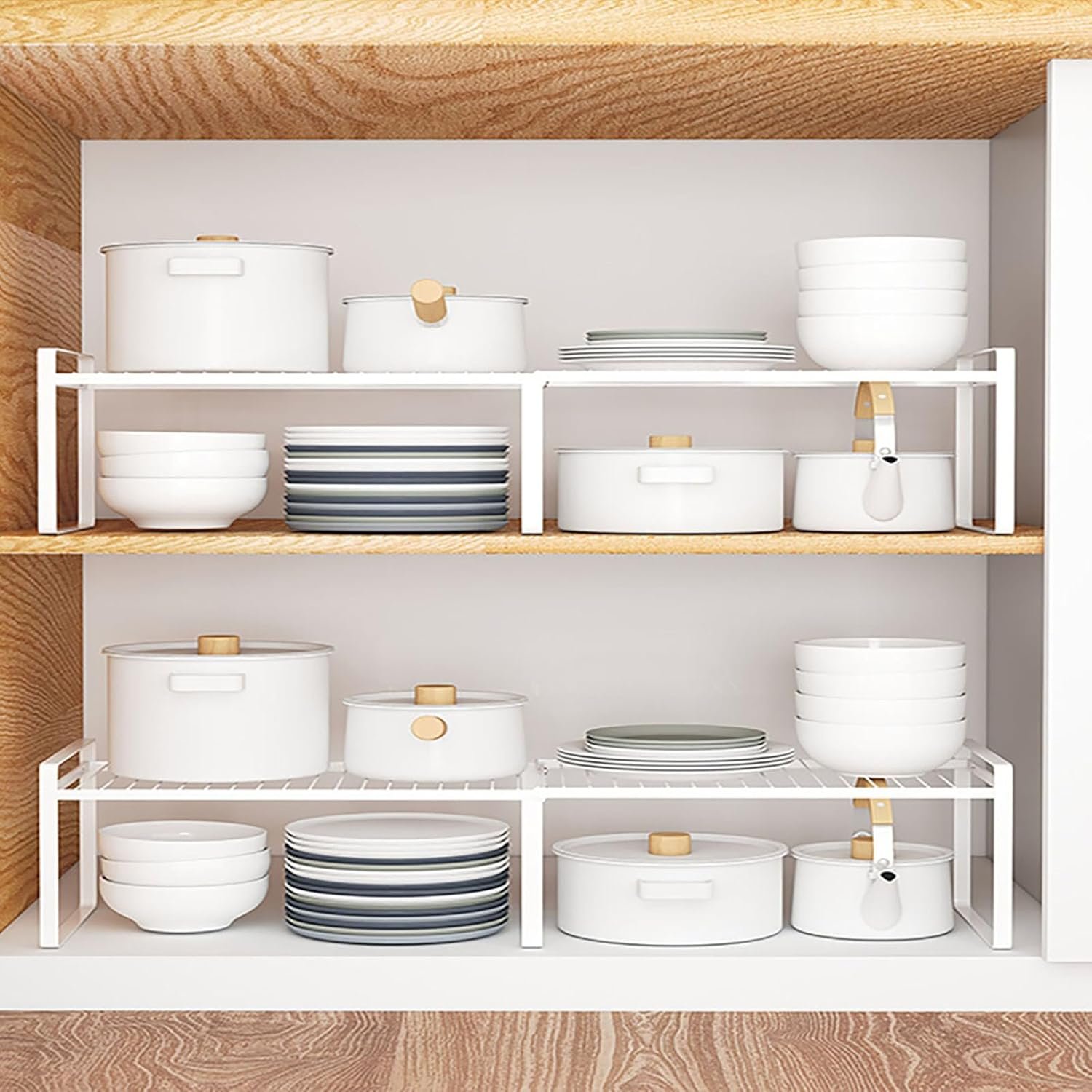
Instead of adding more cabinets or purging items, I added one structural layer.
A stackable cabinet shelf organizer created a second usable level inside the same cabinet. Suddenly:
Adding a stackable cabinet shelf organizer instantly created two usable layers without changing the cabinet itself.
The cabinet didn’t get bigger—but it started working like it should have all along.
Doubling storage isn’t about cramming more in. It’s about separating access paths.
A good cabinet organizer:
Shelf risers work especially well for dishes and containers, which is why cabinet shelf risers for plates and bowls are so commonly used.
Once items stop competing for the same surface, order becomes automatic.
What made the biggest difference wasn’t the idea of organizing—it was choosing the right type of organizer for the cabinet.
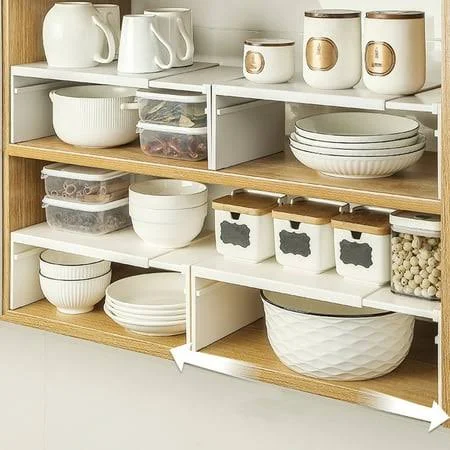
Shelf risers work best for dishes, bowls, and pantry containers.
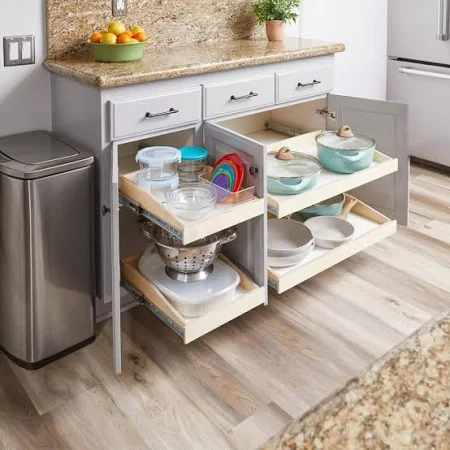
Pull-out cabinet shelves are better for heavy items like pots or appliances.
For heavier items, pull-out cabinet shelves for deep cabinets make access easier without stacking.
Expandable organizers adapt to cabinet width, preventing wasted gaps.
In uneven cabinets, expandable cabinet organizers that adjust to width help eliminate unused space.
The common thread isn’t the product—it’s how the organizer matches the way the cabinet is used.
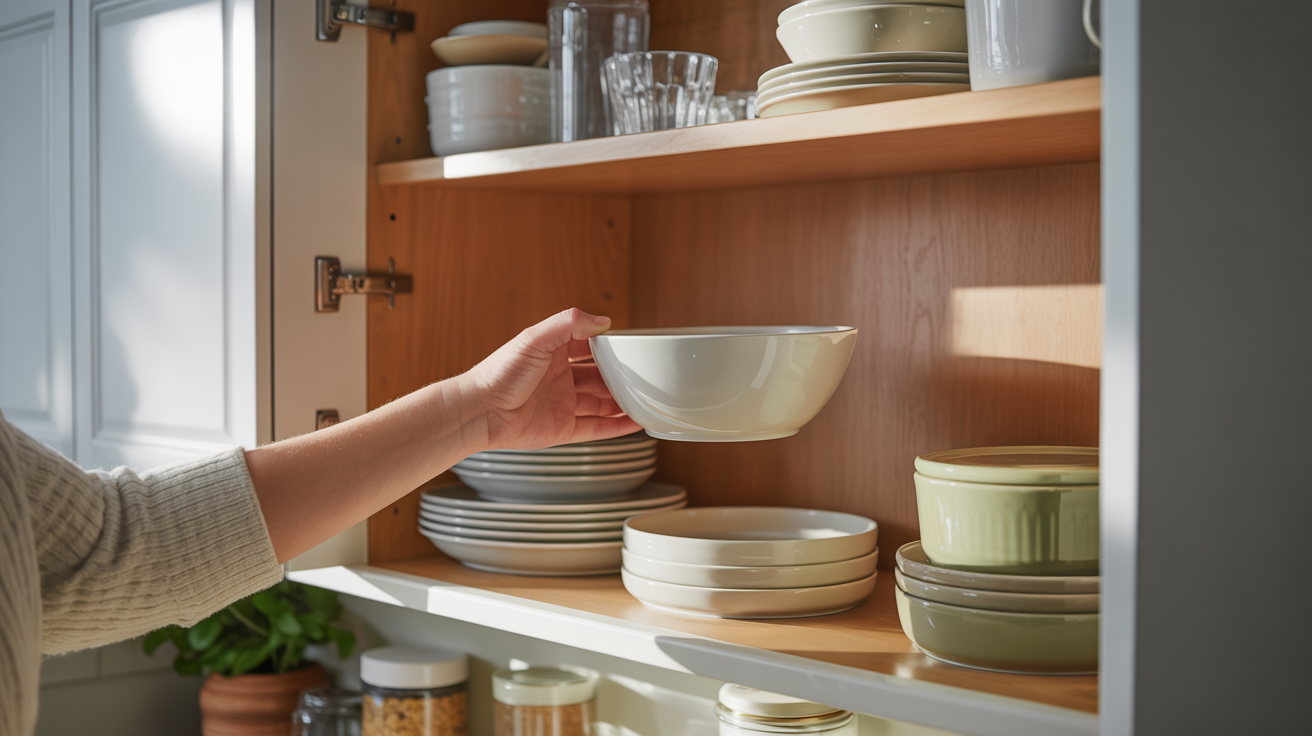
The biggest surprise wasn’t the extra space—it was how much easier the kitchen felt to use.
No more:
Once access improves, mess stops forming on its own.
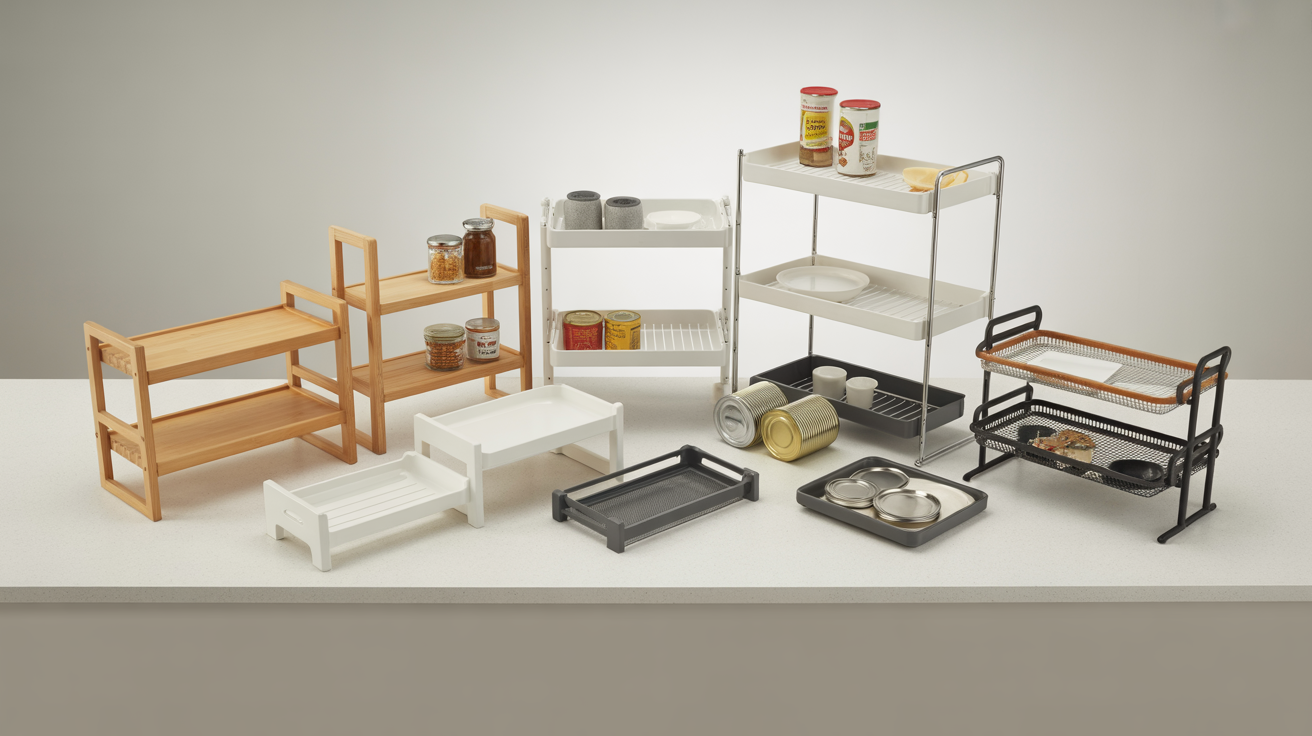
After seeing one cabinet transform, it’s hard not to notice others that suffer from the same issue. That’s usually when people start exploring cabinet organizers on Amazon—not out of impulse, but because the problem is finally clear.
They’re not shopping for storage.
They’re shopping for less friction.
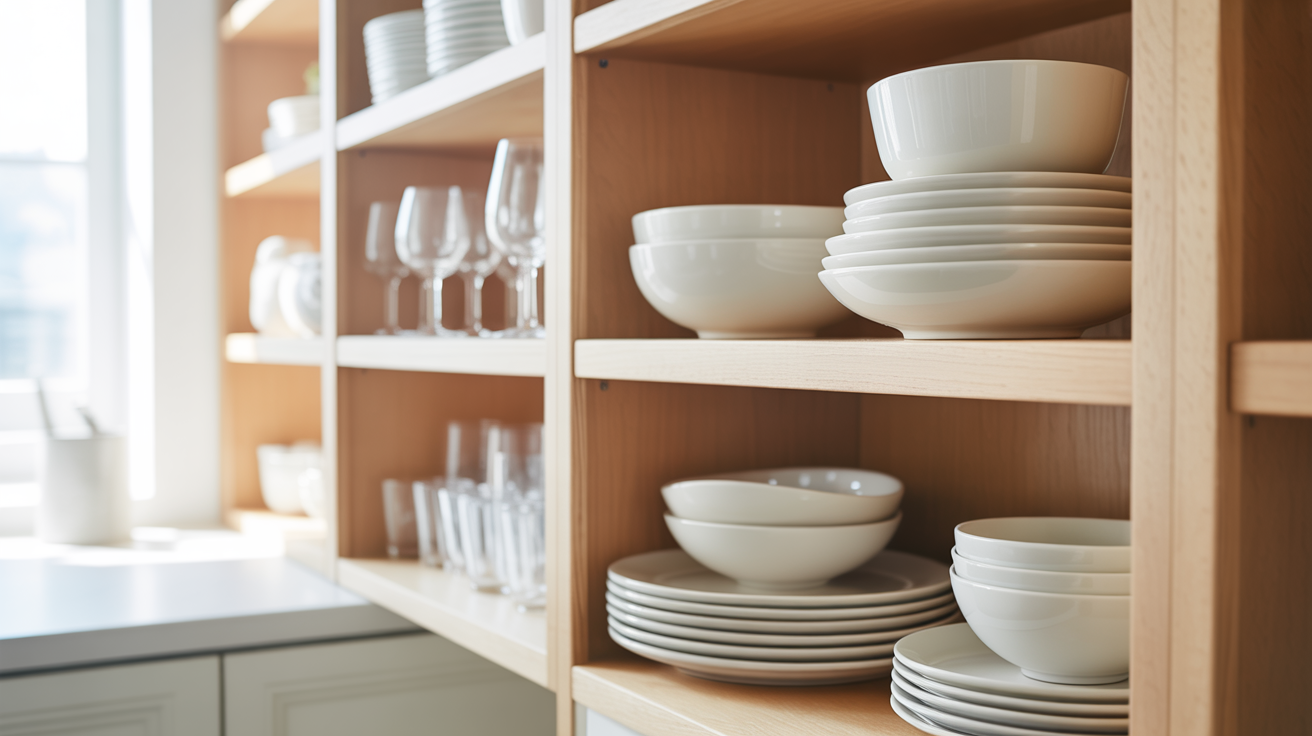
This cabinet organizer didn’t magically create more room—it revealed space that was already there.
When cabinets use vertical space properly, they stop feeling cramped. And when access becomes easy, organization stops being something you “maintain” and starts being something that lasts.
Starting with a simple cabinet shelf organizer designed for vertical storage is often enough to make cabinets feel twice as usable.
Sometimes doubling your storage space doesn’t require a remodel.
It just requires letting your cabinets work the way they were meant to.